 Fouled Anchor Safety
The work order
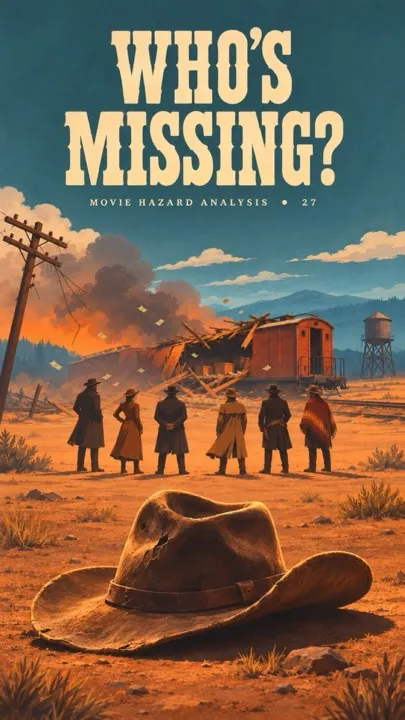
The JHA treats the express car robbery as a job for a seven-person crew: six outlaws and one express messenger. The robbers pack the railroad express car's safe with far too much dynamite, and the blast leaves the car in splinters with debris and cash across the area. JHA Rapid breaks the response into four steps. Each one starts at 10 High and drops to 5 Medium with its controls.
The four steps
What the JHA tells the crew to do after the blast:
- Recognize and report the suspected explosive charge and damaged express car; do not approach or enter the car.
- Withdraw the seven-person crew and establish an exclusion area without approaching the car or suspected charge.
- Notify railroad operations and emergency responders and keep the car and surrounding area out of service pending their direction.
- Await qualified responder assessment and clearance; do not inspect, enter, salvage or clean the express car or debris field before authorization.
What moved the risk
The video turns the scene into a headcount puzzle. Six people stand clear of the wrecked car, and a seventh hat lies in the dirt. The report lists seven people, so the hat is a reason to count again. It tells you nothing about where the seventh person is.
Step 2 is where the count happens. The supervisor accounts for all seven workers from a safe location, reports anyone unaccounted for without sending crew members back in, and prevents re-entry until responders authorize it. Qualified responders set the exclusion boundary; the crew does not walk in to put up barriers or estimate a safe radius. With those controls, step 2 goes from 10 High to 5 Medium.
The other steps hold the same line. Nobody handles or moves the suspected charge, nobody gathers cash or debris before responders release the area, and railroad operations keep the car from being moved. The JHA also notes that PPE does not control detonation risk. The control is keeping people out.
The transfer to real work. It's easy to remember the six people who arrived together and overlook the person who was already there. Before anyone counts the cash, count the people, and decide ahead of time who at the muster point accounts for visitors and anyone already on site.
Every hazard, control and risk number shown comes from the JHA itself; nothing is invented or rounded for effect. Inspired by Butch Cassidy and the Sundance Kid (1969): commentary and hazard analysis of a fictional scene as depicted, with no affiliation with the film or its rights holders. The underlying JHA was generated with JHA Rapid, is AI-assisted, and must be reviewed by a qualified safety professional before use. Not a compliance document.